
As we charge into adulting (and responsibilities), we some what quietly stop playing. We begin to classify play as something “childish” or “unproductive,” not realising that in losing play, we also lose something essential: joy, spontaneity, creativity, and connection.
Here’s the truth: adults need play just as much as children do – perhaps even more.
What Is Play?
Play doesn’t mean toys or games (though it can include them). Play is any activity that is:
- Done for its own sake (not for reward)
- Voluntary and joyful
- Process-driven, not outcome-driven
- Full of exploration and curiosity
That could be painting, building something, dancing, singing, storytelling, tinkering, anything that sparks joy really!
As we “grow up”, we traded play for productivity. We filled our schedules with busy. Consequently, we are now seeing a lot of posts on socials where burnout, stagnation, disconnection are common themes.
When we stop playing, we stop experimenting. We stop discovering new parts of ourselves. We stop enjoying the journey.
How Play Benefits Adults
- Boosts Creativity and Problem-Solving
Dr. Stuart Brown, founder of the National Institute for Play, found that play improves our ability to think outside the box. In fact, some of the most innovative companies (like Google and IDEO) have intentionally incorporated play into their work culture to spark creative breakthroughs. - Reduces Stress and Improves Mental Health
Play activates the brain’s reward centre, reduces cortisol (the stress hormone), and increases positive emotions. According to a 2014 study published in American Journal of Play, adults who engage in playful activities report lower stress levels and greater life satisfaction. - Enhances Connection and Empathy
Group play creates shared stories, laughter, and bonding. It softens social roles and builds psychological safety. Brené Brown highlights play as one of the key traits in wholehearted people – it helps us connect without performance pressure. - Supports Cognitive Flexibility
Play challenges the brain to adapt, reframe, and explore new ideas. A study in Psychology Today noted that adults who make time for play have higher cognitive flexibility and better emotional regulation.
What Happens When Adults Start Playing Again
When we reintroduce play into our lives, a shift happens:
- We access new perspectives.
- We let go of perfectionism.
- We recall what matters to us.
- We find joy and energy again.
Play isn’t an escape from life. It’s a way to re-engage with life.
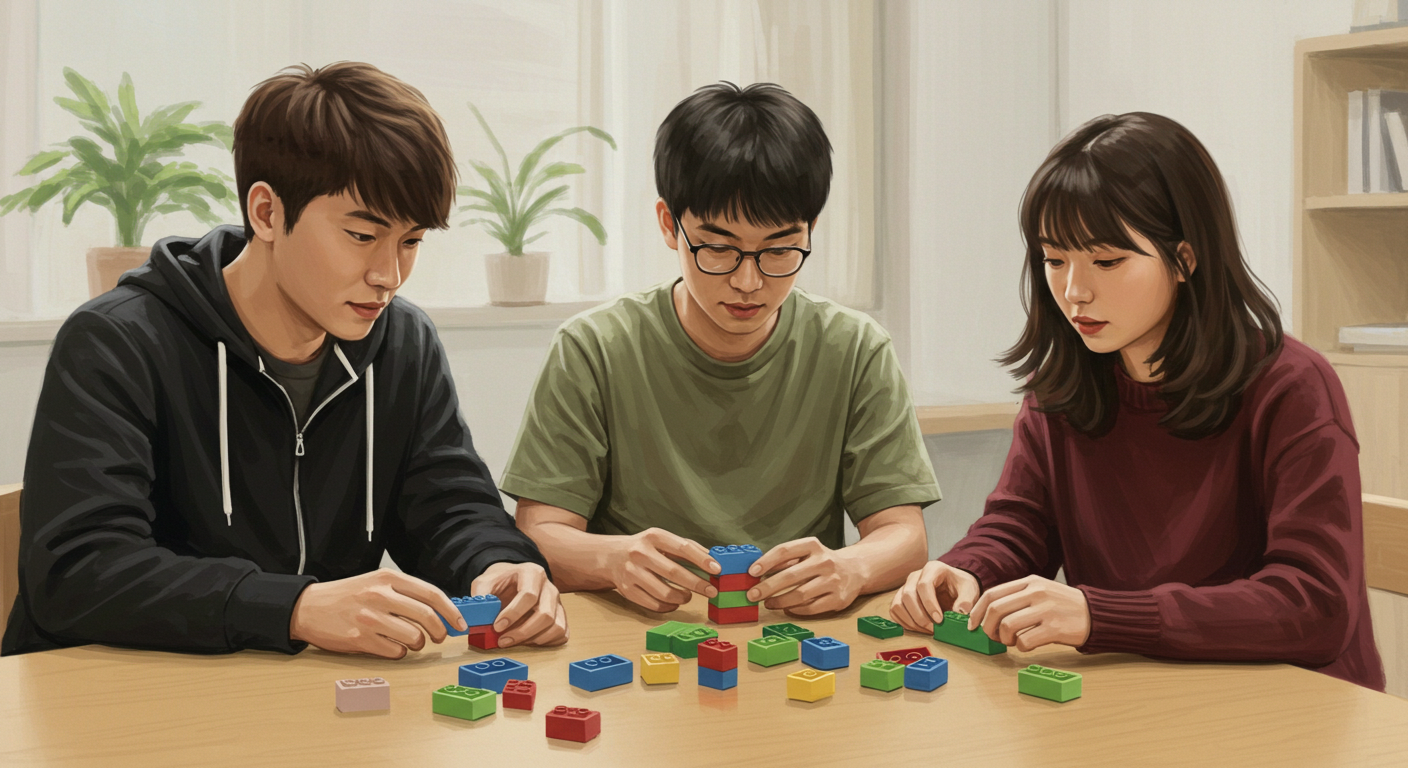
Play isn’t childish. It’s courageous.
In a world obsessed with outcomes, play brings us back to process. Play reminds us how to breathe. In times of uncertainty, play helps us find our footing. Playing requires no purpose, just joy.
So yes, adults need play. And perhaps, it’s just the missing piece you didn’t know you were looking for.
Play is important, and that’s why in my coaching practice, I use play as an integral part of the KoPlay Method. It’s incredible to watch adults who walk in with career confusion, self-doubt, or emotional exhaustion light up when they start building with their hands. They tell stories, they share insights, they reflect.
Reflection: Where Could You Invite More Play?
Ask yourself:
- When was the last time I did something just for fun?
- What kind of play did I enjoy as a child?
- What would “adult play” look like for me now?
Start small. Try something silly. Create something for no reason. Be curious. And notice what shifts (including emotionally).
You can absolutely work on this exercise on your own or if you’re feeling stuck and want to talk it out with someone, book a KoPlay Discovery Play Session with me at david@saltnpepper.sg.